



A change in hail port is important news for owners of federally documented vessels. The hailing port isn’t just a name on the back of the boat. It is the official home port of the vessel in federal documentation records. A hailing port often needs an update when the owner moves, alters an operational base, or makes business detail changes. Hailing port change process is explained in detail in this article.
A significant change that many vessel owners overlook. However, having wrong hailing port information can create compliance issues or inspection problems. Federal records should always contain current and accurate vessel information.
The change of a vessel’s hailing port does not affect either its ownership or nationality but does impact its identification records. If you fill the change out correctly, it will keep the boat totally compliant.
Comprehending the alteration Hailing port
A hailing port is defined as the city and state imprinted on the stern of documented vessels. The information on the boat’s initial base is updated when it changes. The document records and the vessel itself must reflect this change accordingly.
The location of the vessel may not always be the hailing port. The port of registry indicates the vessel’s nationality. The owners generally change it when they relocate, reorganize the business, or alter the long-term mooring.
Changing a vessel’s hailing port is important to maintain records. Federally issued documentation is legally valid. The vessel markings and documentations shall not mis-match failing which it will be a compliance issue.
Keeping records up to date alleviates confusion from an administrative perspective. Proper hailing port information supports enforcement, identification and regulation.
| Aspect | Updated Hailing Port | Outdated Hailing Port |
|---|---|---|
| Documentation accuracy | High | Inconsistent |
| Inspection readiness | Strong | Risk of issues |
| Record clarity | Clear | Confusing |
| Compliance confidence | Maintained | Reduced |
When and why a change of hailing port is necessary
A port change is needed when a vessel’s home port declaration is no longer accurate. This update is triggered by several situations.
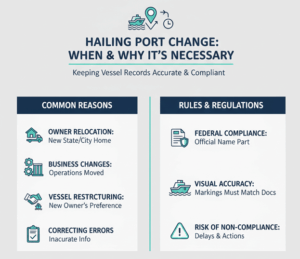
Common Reasons for Changing a Hailing Port
After moving to a new state or city, owners frequently alter hailing ports. An original port can become inaccurate at a long-term relocation. Business changes, like moving operations, may also require changes.
Selling or restructuring SHIP MORTGAGE is another cause. Although ownership changes are not included, the new owner may want to elect a different home port. Records will be updated in timely manner.
Rules and laws in consideration
Vessel Information must remain accurate per federal documentation. The hailing port is part of the ship’s official name. If you do not update it, you risk noncompliance.
Painted markings may not match inspection documentation. These inconsistencies could delay transactions or activate corrective actions.
A change is required when common situations
- The vessel’s home base will permanently relocate.
- Alteration in the main address or operations of the owner.
- Business reform activity of vessels
- Correcting previously incorrect port information.
- It is critical to be accurate.
Change in Hailing Port versus Other Document Changes.
Changing a hailing port is quite straightforward compared to other documentation changes. Although some changes affect the ownership or status, this is an administrative update.
Documenting updates on complexity
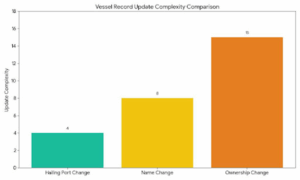
- The highest hierarchical complexity is represented by the ownership changes where one finds legal documents galore, transition history scrutiny and formal transfer records to trace the chain of title barring any malicious intentions.
- Changing conditions of the vessel name is less complicated than an ownership transfer. With that said, it requires a high level of coordination with the registries. This is mainly to ensure the active certificates are updated and that the identity of the coded vessel remains the same in the world databases.
- Hailing port change is the most convenient update which majorly relates to location data. However, it remains an essential compliance requirement, and operators must record it accurately to maintain vessel status.
Helpful Tips on When the Hailing Port Change Is Complete
A successful completion of a HAILING PORT CHANGE requires preparation. Owners should first confirm the designated city and state. It is necessary that the information is accurate and not misleading.
After approval, the physical markings on the vessel should change. Clearly visible on the stern must be the name of the vessel and hailing port. Proper markings enable identification and inspections.
The timing also matters. Soon after making the change after relocating helps to avoid prolonged discrepancies. Waiting a long time to update may complicate an inspection or transaction.
We recommend maintaining records of the change. Documents are that support audits and future reference. Properly organized records protect owners and operators.
Best practices for help include
- Make sure to enter the correct city and state for new hailing port.
- Update vessel markings as soon as approved.
- Please submit changes after moving.
- Store confirmation documents safely.
- The steps taken ensure no delays.
Why changing the hailing port is important?
A hailing port change is a simple but important step that ensures accurate federal vessel documentation. Although it does not change ownership or nationality, it ensures that a vessel’s papers match the facts.
Vessel owners must regularly update their hailing port information to comply with requirements and be inspection ready. Vessel Registrar LLC Being prepared can save time and costs. Regulators must recognize what was delivered and ensure they record it accurately. It helps to minimize discrepancies during dealings.
When and how to make a hailing port change is critical to making confident management and documentation decisions. This simple update helps ensure that your vessel remains compliant and responsible ownership.
