




A boat bill of sale form is essential paperwork in any vessel transaction. Whether you’re purchasing a small pleasure craft or selling a federally documented yacht, this written agreement will confirm ownership transfer. If you do not have that, registering or documenting the vessel may be delayed.
This legal document is proof of sale between two parties. It summarizes the description of the vessel, price of the vessel and signature of buyer and seller. To process title transfers, many states require it. Federal documentation agencies also rely on formal sales records.
Though the format may appear simple, a tiny error can create a big problem. If details are missing or the hull number is wrong, the approval will get delayed. Knowing how the document works protects the parties.
This will give you insight on what the form states, how it differs from other ownership papers and how to fill in the form correctly.
Importance Of a Boat Bill of Sale Form Explained
The document known as a boat bill of sale form refers to a written agreement that evidences the transfer of a boat from seller to buyer. The date of the transaction and the price that was agreed upon is clear. This agreement shields both parties against future conflict.
It proves the lawful ownership of buyers. It indicates when the date liability ended for the seller. This difference is important for accidents and unpaid registration fees.
The form typically contains identification information of the vessel. All the details must match exactly with the official records. Application rejection may occur due to trivial mistakes.
| Required Information | Purpose | Level of Importance |
|---|---|---|
| Buyer and Seller Names | Identifies both parties | High |
| Vessel Make and Model | Confirms boat description | High |
| Hull Identification Number (HIN) | Unique identifier | High |
| Purchase Price | Records financial terms | High |
| Date of Sale | Establishes legal timeline | Medium |
| Signatures | Validates agreement | High |
Certain states give out a format. Some others permit custom documents if the required information is there. A Thoroughly Completed Vessel Document Avoids Misunderstanding. Registration updates and tax assessments are also supported.
Laws and Types of Vessel Transfers
The rules governing boats depend on whether a boat is state-registered or federally documented. The required form may change in every case.
Licensed Ships
The state has authority over most recreational boats. In these situations, the boat bill of sale form helps transfer the title and update registration.
Provinces might necessitate
- An officially sanctioned state form.
- Liens already created.
- Signatures notarized in certain places.
- Information for vessel identification.
The sales tax is usually calculated on the listed purchase price. Being accurate is important.
Before the transfer of the vessel, waving of lien by Bank will be required if there is a loan against the vessel. Confirming lien release documentation is included, buyers should.
Documented Federal Ships
Federal authorities may document larger vessels. The paperwork for these transactions is specialized.
In this situation, the seller must complete an official federal bill of sale. The buyer must resubmit the documentation paperwork. You may need to verify citizenship.
State registrations are faster than federal process registrations. Good preparation helps avoid delays.
Both systems depend on accurate documentation Search of sales. The essential aim is the same: a legal ownership record.
Differentiating Between Basic and Comprehensive Bill of Sale Forms
Not every form has the same amount of detail. There are some basic templates. Other legal clauses are extensive.
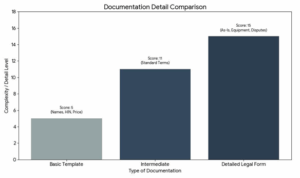
- The basic template for foundational identification, which scores 5 out of 15 for detail level, contains the essential names, identification of the vessel, price, and signature of the parties. This is a way to begin a small craft low risk private sale.
- Liability Mitigation: A Detailed Legal Form ($15/15$) incorporates vital as is terms, warranty clauses, equipment lists, and more so that a future dispute does not arise regarding the vessel’s condition.
- The risk-based complexity is such that the documentation detail must correspond to the transaction value, say that of a yacht. More valuable assets come with a greater financial risk, therefore require a heavy formal contract.
How to Correctly Complete a Boat Bill of Sale Form
You should conduct an examination before completing the document. It’s possible to run into unnecessary problems.
Begin by checking the hull identification number. The number should be the same as the boat’s stamped. Confirm It Through Registration Records.
After that, ensure correct spelling of all names. The buyer’s legal name must match identification documents.
Make sure to follow these steps for Boat Bill of Sale Form
- Examine the details of the vessel identification carefully.
- Establish the negotiated purchase price.
- Confirm the lien satisfaction document.
- Get both parties to sign.
Keep copies for your records. Maintaining electronic and paper copies provides an extra layer of security.
Submit the form to the relevant authority after it is complete. Offices dealing with authorized ships.
Submitting on schedule to avoid late fees and gaps in registration. Buyers should update the vessel registration before operating the vessel.
Documentation can protect your Boat Bill of Sale Form
A boat bill of sale form acts as the legal basis of any transfer of a vessel. It verifies who owns a company and how much they own. Without this document, the registration and documentation process may stall.
It is important to know whether your vessel is state or federally regulated, and Vessel Registrar LLC can assist with the process. Each system has specific filing requirements, and the document must match official records exactly. Buyers protect themselves by properly documenting the transaction, while sellers limit liability by specifying the sale date.
The format selected depends on the value and complexity of the vessel. Basic templates are effective for safe sales. More complex transactions benefit from more detailed agreements.
Accuracy is essential in every case. To ensure adherence to legislation, uphold peace of mind, and provide protection to both parties.
