



If you saw a dilapidated or neglected boat drifting along the shore, you would think a lot! Residents and boaters want to know how to report abandoned vessel in Florida by not creating complications or delays. Abandoned boats create environmental hazards, navigation hazards and property disputes. Waterways and Communities are protected by good actions.
Due to extensive coastlines and inland waterways, Florida is particularly vulnerable to derelict vessels. Boats often remain unattended due to storm damage or unpaid marina fees. When this occurs, local authorities depend on citizens for information.
Knowing what basically defines an abandoned or derelict vessel is important. The process of reporting involves authorities and documentation. If you follow the right steps, you can keep the waterways more safe and clean without personal liability.
Florida’s Abandoned and Derelict Vessel Program
Florida law differentiates between abandoned vessel and derelict vessel. An abandoned boat is a vessel lying on either public or private grounds without permission. The vessel is derelict if it is in bad condition and poses a risk to the environment or safety and has a poor condition.
You can’t just take a boat that looks unoccupied. It is important to check document before acting. A mix-up in twig identification can delay enforcement action.
Common indicator that a vehicle have been abandoned include expired registration on the motor vehicle, severe structural damage and long-term neglect of the vehicle. Nonetheless, these indicators are not an indication of legal abandonment.
| Feature | Abandoned Vessel | Derelict Vessel |
|---|---|---|
| Ownership Status | Owner unknown or unresponsive | Owner known but vessel unsafe |
| Physical Condition | May appear intact | Often damaged or sinking |
| Environmental Risk | Possible | High risk |
| Legal Action Required | Investigation | Immediate enforcement |
| Reporting Authority | Local law enforcement | Law enforcement and FWC |
Proper identification helps these agencies react better. It speeds up resolution reporting through right channels.
Waterways are regulated in Florida. County sheriffs, the Florida Fish and Wildlife Conservation Commission, and city marine patrol units are law enforcement agencies. Coordination of each agency depends on jurisdiction.
How to Report Abandoned Boat in Florida
When you begin the process of reporting abandoned vessel Florida, it pays to be clear. While not making direct contact with the vessel, give as much detail as possible.
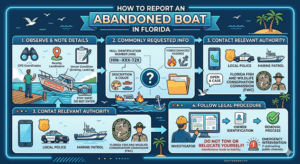
Find the location and state
Start by marking the exact place. If available, GPS coordinates are useful. Add a nearby landmark or dock reference.
Give a description of the condition of the vessel. Indicate whether it is sinking, fixtures navigating, or leaking fluid. Photographs help investigators, but take them safely.
Get in touch with the relevant authority
Usually, your first call should be to local police or Marine Patrol. If the vessel is damaging the environment, contact the Florida Fish and Wildlife Conservation Commission.
Commonly Asked for Information
- Location of the exact vessel.
- Visible hull identification number.
- Description and color of the vessel.
- Damages or hazards were observed.
A case will be opened and the vessel examined. They make an effort to identify the owner from the registration records or federal documentation.
Do not try to tow or relocate the boat yourself. Interference not authorized may produce liability. Reporting is the safer and legal option.
If the ship obstructs a public channel or poses an imminent danger, then emergency personnel could intervene quickly.
Filing Report vs Removal: What’s Happens After Filing
Making a report does not mean it will be removed right away. Authorities must follow due process. They check who owns the property and inform the person responsible.
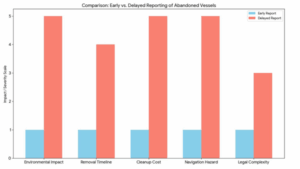
- By reporting the vessel promptly, you can contain environmental impact at an early stage, prevent the release of harmful oil, fuel, and debris into the ocean, and minimize harm to the marine environment.
- A dramatic reduction in the time required for removal would happen if reported at the earliest, as authorities would take weeks to remove it. However, if not reported then it would take authorities months to do so.
- When the vessel is dealt with before the structure deteriorates or the vessel sinks, the cleanup and removal costs will be considerably cheaper.
Florida Boaters and Waterfront Residents’ Practical Tips
If you have a boat or live near water, it’s just as important to find out the prevention methods. Many boats are abandoned after storms or due to financial hardship.
Mitigating things at the right time eliminates issues. Keeping the vessel compliant and seaworthy with proper documentation and maintenance.
Here are responsible practices of owning dogs
- Keep your existing registration or federal documentation.
- Ensure vessels are secure during storm seasons.
- Maintain your insurance coverage.
- Speak to marinas on storage contracts.
Exercise caution if you encounter a suspicious vessel. Don’t board or try fixes. Let authorities assess legal status.
When the boat is abandoned in Florida waters, be factual and dispassionate. Never a presume to owns intent. Clear communication leads to precise investigation.
Community involvement is key to protecting our waterways. Residents educated about the code can help create a safer boating environment.
Reporting helps safeguard Florida waters
Florida residents can learn how to report abandoned vessels to protect the waterways. Harmful to navigation and wildlife, abandoned boats are legally problematic. When you report in good time, authorities will follow the proper enforcement process.
Florida’s system depends on coordination between the public and state marine enforcement agencies. Providing clear descriptions and accurate location details helps speed up resolution, while ensuring that any vessel removal follows proper legal procedures. Services like Vessel Registrar LLC can assist in navigating documentation requirements within this process.
Through knowing the definitions, knowing whom to contact and supplying full particulars, you can help protect the environment and public safety. Water quality monitoring by reporters guarantees pollution-free waters in Florida’s inland and coastal waters.
