



After a waiver has been issued, the federal maritime waiver compliance obligations become critical. Getting a waiver is important but staying compliant after receiving it is just as important. The subsequent duties after the application phase are underestimated by many vessel owners.
Having a maritime waiver does not remove oversight. It substitutes the standard requirements with alternative obligations that are specific to the vessel’s size or use or operational scope. Compliance allows for flexibility without compromising the integrity of safety and regulatory objectives.
The consequences of not meeting compliance standards include suspension, fines, or disruption of business operations. As a result, understanding post-approval obligations is as important as eligibility requirements. A vessel owner’s clear understanding will protect and facilitate smooth operations.
This article discusses maritime waiver compliance requirements. It includes what compliance is, why it is important, how it is different than standard compliance, and actionable tips for staying compliance. Vessel owners who comprehend these requirements are better prepared for safe, legal operations.
Understanding maritime waiver compliance requirements
The conditions under which a vessel owner must act following the approval of a waiver. These conditions replace or modify some technical regulatory obligations but proprietary requirements must be complied with.
Compliance requirements aim to create a balance. Regulators allow confidence in the safety, environmental protection, and policy goals through flexible standards. Approval of waivers is not a license to avoid responsibility.
Operational limits, reports or restrictions on use are examples of compliance requirements. The characteristics of the vessel and the content of the waiver determine the conditions. Pet owners must have a deep understanding of the terms.
Sea waiver compliance must be taken seriously, due to accountability. Authorities count on compliance to guarantee waivers are used correctly. Not complying with the agreement will destroy confidence, and could jeopardize chances for future waiver opportunities.
| Aspect | Standard Compliance | Waiver Compliance |
|---|---|---|
| Rule structure | Fixed | Conditional |
| Oversight level | Routine | Targeted |
| Flexibility | Limited | Moderate |
| Risk of revocation | Low | Higher if violated |
Core compliance obligations following waiver approval
After being granted a waiver, vessel owners must comply with the waiver compliance requirements of the maritime. Depending on the kind of waiver the obligations may differ but in principle they are somewhat similar.

Working conditions and use
Many waivers have particular operational limits. These could limit the location, manner, or reason for a Vessel Services operations. The waiver will be invalid if operating outside of conditions approved by ZCV.
Owners must ensure crew and operators understand these limitations Miscommunication could cause accidental breaches. Internal procedures should be in place to achieve compliance.
Log report and oversee
Waiver compliance usually features reporting requirements. Periodic updates, operational logs, or confirmation of continued eligibility may be required by authorities. Regulators should obtain reports summarizing waiver effects.
Keeping proper records is important. Documentation aids compliance reviews and safeguards owners in audits. If all is okay but records missing, it can raise concerns.
Regular compliance obligations include
- Following operating restrictions.
- Keeping necessary records.
- I will submit reports when required.
- Permitting inspections or audits
The Waiver compliance is it compliant with the standard compliance
Learning requirements related to maritime waiver compliance is easier once you know standard compliance frameworks. Standard compliance has the same rules for all, whereas waiver compliance is conditional and monitored closely.
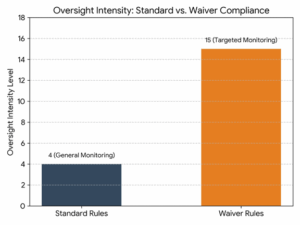
- Under Waiver Rules, the vigilance on vessels increases by almost 275% (Score 15) compared to regular vessels (Score 4).
- In the case of conditional freedom, the general freedom permitted by the rules is that a vessel can perform operations in the broad parameters that have been prescribed.
- The substantial increase in the intensity of oversight indicates a corresponding increase in compliance responsibility for the owner. This is due to the owner having to prove that safety and policy goals are maintained despite non-compliance with the standard rules.
Tips on How to Stay Compliant
To maintain compliance with maritime waiver requirements requires proactive management. It is the duty of the owner to first review the waiver approval documents. Getting to know every situation is essential.
Internal compliance procedures help to ensure uniformity. Guidelines for operators and crews help in reducing the risk of breaches. Train increases awareness.
It is also essential to monitor operations against the waiver terms. Regular internal checks allow to correct issues. Quickly addressing a problem stops it from getting worse.
Also, owners must gear up for the inspections or reviews. Organization and transparency build confidence with regulators. Collaboration promotes lasting adherence.
These are really helpful best practices
- Keep waiver approval documents easily accessible.
- Guide staff on waiver-related specifications.
- Conduct internal compliance reviews.
- keep organized records and reports
These practices reduce the risk of non-compliance.
The significance of maritime waiver compliance requirements
All maritime waiver compliance requirements are crafted to ensure safety policy accountability. Trust between vessel owners and regulators are built on these.
Compliance for vessel owners ensures continuous operations and waiver validity. Vessel Registrar LLC the authorities, this ensures waivers don’t have unintended consequences. This balance is essential for a relevant maritime regulation.
When owners know and do something to manage their compliance obligations, they can operate under approved waivers with confidence. Maritime waiver compliance requirements are not obstacles but a structured framework that encourages responsible and flexible vessel operations.
